
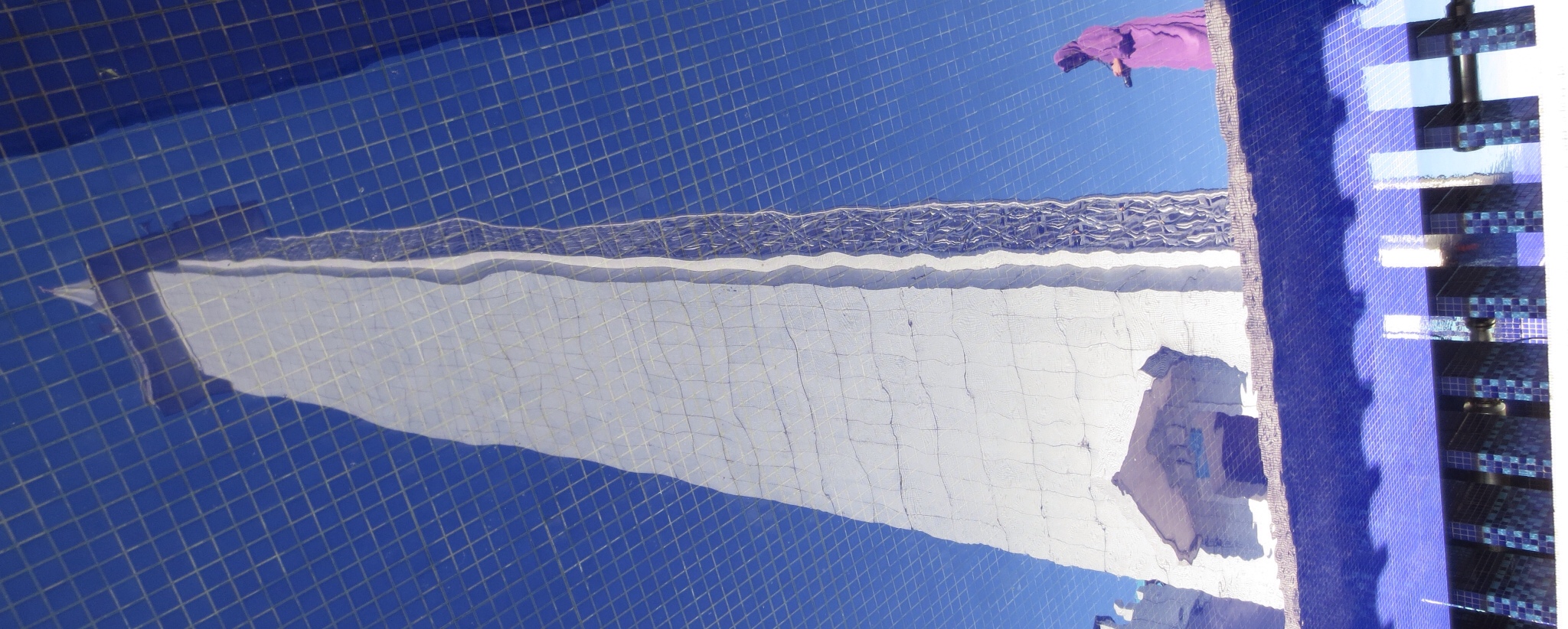
Kuala Lumpur went by in a blur, not because we were drunk, since drinks in Malaysia are unaffordable on our shoestringer of a budget. No, KL was hazy because it is a city that is both blessed and plagued by its own infrastructure. Touring it on foot almost always led us from a wide sidewalk, to a sidewalk, to a yellow painted line on the road, to an all out highway or overpass. Walkers find city sights by using KL’s labrynthe of above ground causeways that connect its commuter trains, metros, monorails, and buses. You would figure that upon leaving Central Station a pedestrain could find his way, but we ended up in a vast, empty building, replete with high high ceilings and infinity pools, along with several billboards that asked us to ponder “living life here, in central.” We found our way back to the metro. We didn’t put down a deposit on a condo in KL.
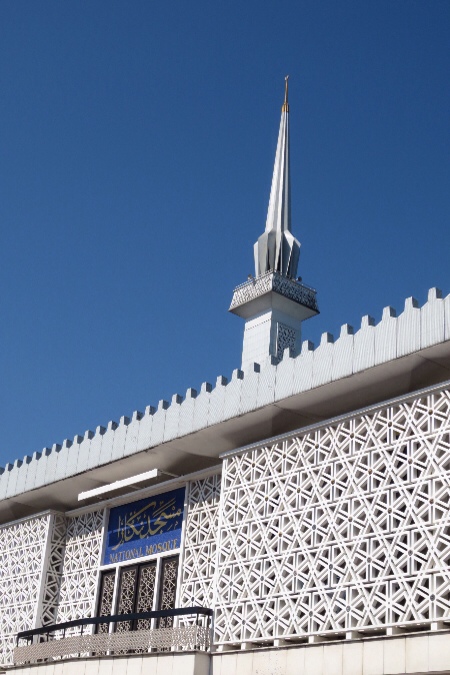
The capital city also belied the theme of religious diversity that we fet was so prevalent in Melaka. Here, Islam is the lingua franca – from the women in colorful headdresses to the volunteer guide at the National Mosque that explained the religion from high to low, left to right, up and down. She was informative, if a bit preachy – it’s inevitable that a conversation about religion that arguments about belief and faith will crop up. That’s fine. It’s just tougher to swallow the “that’s what God said” pill than the “well, I have faith, and that’s what I believe in” pill.
We’ve learned a bit of Malay. It is actually quite similar to English, at least certain nouns and adjectives. Terrific becomes terrifik. Bus becomes bas. But then thank you becomes terimah kasih. Malay went through many permutations through the years, borrowing much from Sanskrit beginning somewhere in the 7th century, and getting infiltrated by English during colonial times. Indonesian Malay took another route altogether, owing to the influence of the Dutch.
From Kuala Lumpur we took a bus to Lumut, then a short ferry hop to Pangkor Island. Whisked away from the “jeti” (you guessed it, jetty, in English) in a pink minivan, we followed the winding mountain roads to Teluk Nippah for some greatly looked forward-to beach time. The town was bustling – the reggae hostel was full-up, other options were pricy, and I defiantly proclaimed that we should return to the mainland and just forget about the whole beach idea (I’m brilliant in 38 degree heat after having only checked out 3 hotels, let me tell you). Eventually we found a comfy a-frame with a/c in what I would call the easiest bargaining experience of my life: I asked the price, she said 65 Ringit, I reply that we will likely stay 3 nights, and she zings me back with an ok, 50 Ringit. Sold.
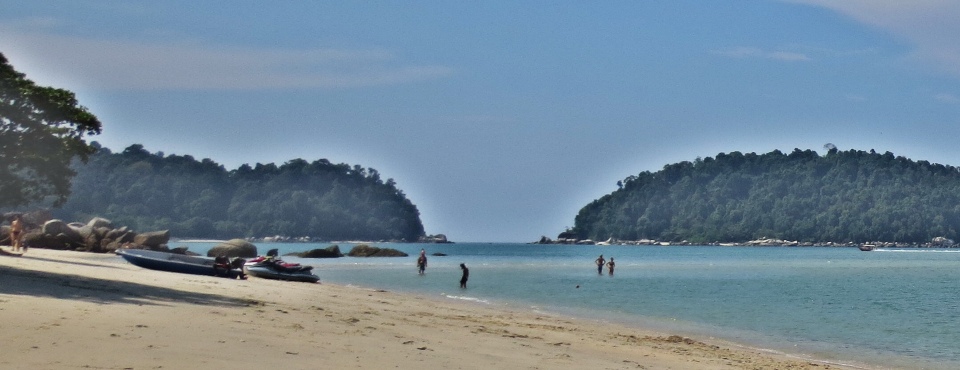
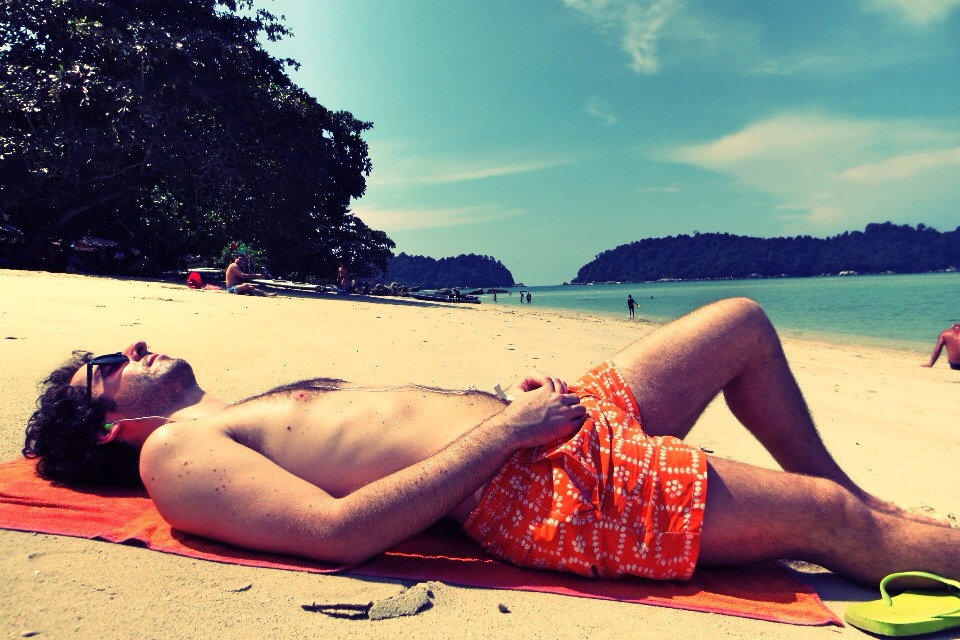
Nippah Bay is a familly friendly beach town – by that I mean it is overrun with Malay families with adorable toddlers chowing down on fresh seafood in restaurants that do not serve alcohol, but that serve ABC, a strange concoction that we would probably call ice cream, if ice cream were sugary syrup, lots of ice floating among sweet fruit chunks, in a giant banana split sized dish, eaten and drunk through a straw. The town itself strangely laid out – concrete risers, on which the too-many vendors sell the same t-shirts and dresses, manage to obscure the beach and ocean from view, and there are no ocean-front hotels. But a short 5 minute walk over a hill leads to a different beach that has it just right – swinging hammocks, white sand, blue water, and barely another soul in sight.

Marianna
Feb 1, 2013 -
As i was reading, it felt like I was there with you. Great write up, as enjoyable as informative. Keep up with learning local words, don’t forget the “sanskrin”(?)..
Linda
Feb 2, 2013 -
Hoi Steve. U look so Steve like lying on the beach. Wear factor 60, Teri mah kasihj. Hahah spellcheck.