
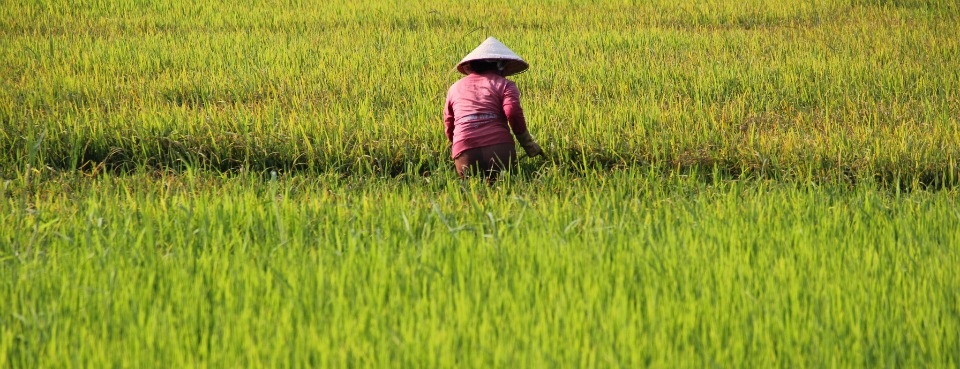
Where typical Vietnamese conical hats – woven from reeds to offer airy shade – are worn by rice farmers in the paddies, vendors in the city, and tourists in the departures line at the airport.
Where unemployment is virtually nonexistent (much to the communist government's content) because every man with a motorbike can sit around offering rides and tours, and being “gainfully employed.” (The really ambitious ones even offer marijuana and Viagra by night, thus actually holding down two jobs.)
Where, because buildings used to be taxed by width, most hotels, apartments, and simple homes are no more than fifteen feet wide, though often quite tall. Where most buildings serve dual purposes: hotel and restaurant, resturant and hairdresser, hairdresser and massage parlour, massage parlour and hotel. And everything is conveniently a “travel agency.”
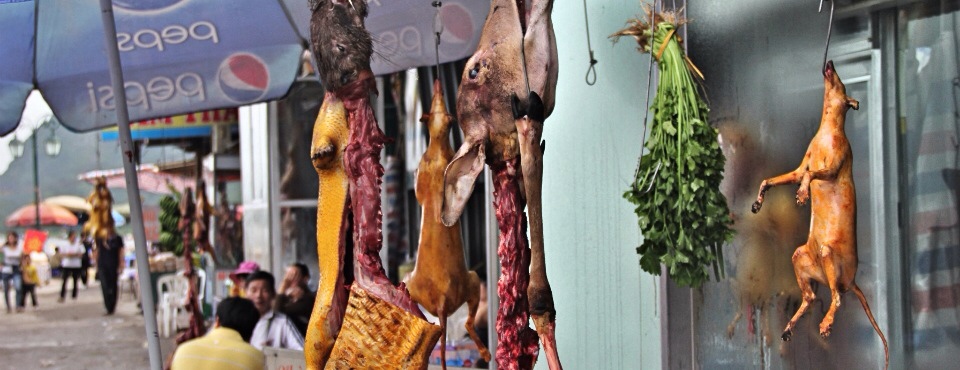
Where, in the North, it's possible to find restaurants with rats, porcupines, deer, and ostriches hanging, grilled and ready for the eating. Though, while the body meat is picked at, the furry heads and tails are left intact.
Where guard dogs might bark through the night – all through the night – and find themselves being roasted the following morning.
Where shoes are a big deal, with passerby shoe-shiners attempting to clean and polish even the dirtiest pair of old flipflops for more than the original cost of the shoes themselves. Where, in Hanoi, women wear designer high-heels and men sport fancy leather dress shoes, while further south, the shoes of choice in both city and country look like yellowed, plastic shower slippers.
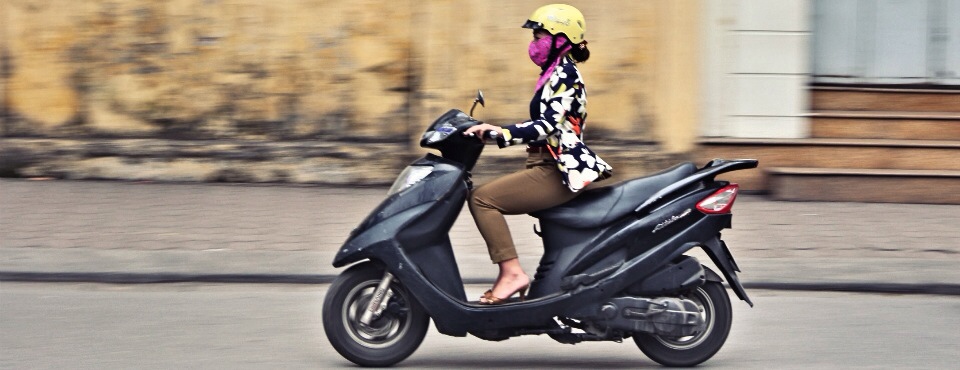
Where many women take on the day in matching top and bottom pyjamas – the peasant's formal attire – ranging from pastel coloured, to those with vivid floral and animal prints. And almost always reminiscent of what you wore as a kid.
Where lady vendors, selling anything from restaurant food to overpriced day trips, lure you in with screeching orders: “You come here now! Sit down, sit down now!”
Where touts grab you by the arm and force services upon you – massages, shoe polishes, a cup of tea – before you can even think to say no.
Where peasants bury their dead in places that are most near and dear to them, and as a result, burial mounds, small graveyards and fancy mausoleums are often found in the middle of the lush, flooded rice fields.
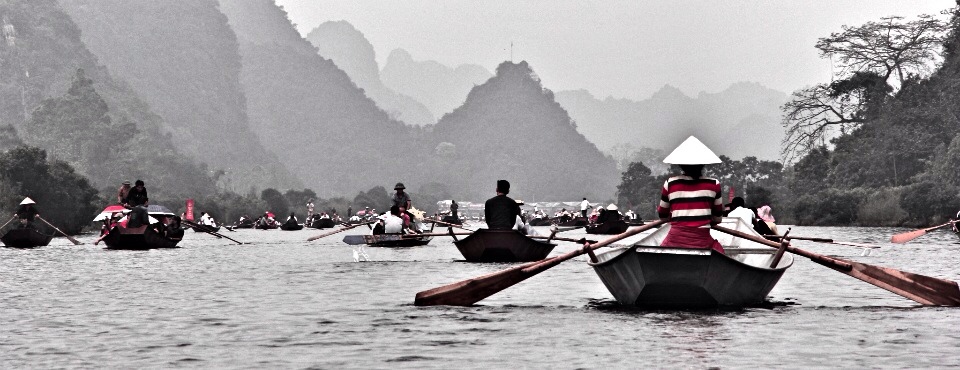
Where mocha rivers snake lazily between protruding limestone cliffs and mountains that jut out of the landscape like cones.
Where nothing is wasted, as testified by the variety of oddly shaped meat floaties in your vegetable soup.
Where open-air barbershops are comprised of a crumbling cement wall, with cutting tools and a small mirror hanging from nails and an old swivel chair welcoming passerby customers. Where clippings of hair – usually short, as Vietnamese men seem to cut their hair no less than twice a week – are left to fly away in the wind.
Where streets are grey but clean since garbage is thrown out on the street or swept via stick-bristle-broom to the curb, from where it is collected later in the day.
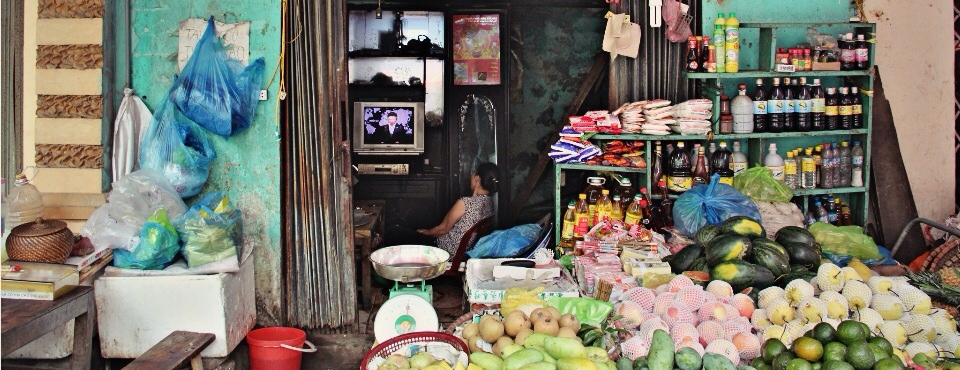
Where building colours suggest that the country has an oversupply of teal and yellow outdoor paints.
Where beads of sweat form on your every surface and, without a fan to at least rearrange the air, the humidity is practially unbearable.
Where water buffalo graze gently in graveyards and on grassy highway shoulders.
Where chickens, pigs, and goats in transport – if they're lucky enough not be bagged alive – ride on minivan roofs or as upside-down passengers on motorbikes.
Where, despite impossibly chaotic motorbike traffic, the blind would have no problem crossing the street. Where the best way to take on the rush-hour frenzy is to simply go for it: step into the street and cross at a slow and steady rate so drivers can (and do) adjust around you. (Where closing your eyes might even help.)
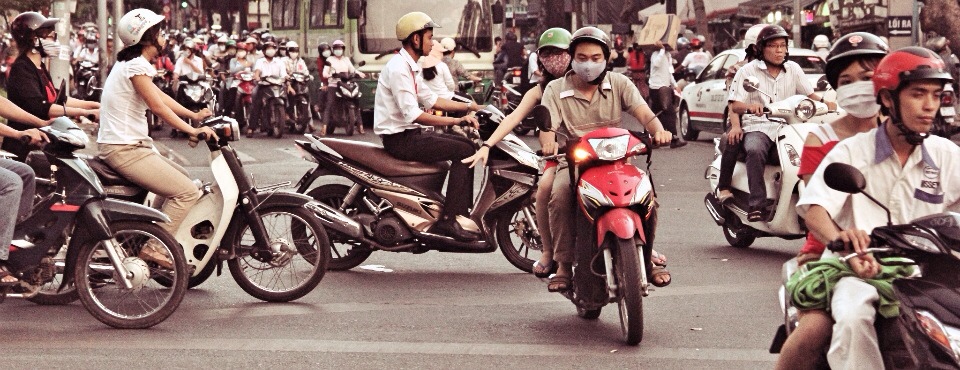
Where everything – from a dozen crates of eggs, to big bolts of bright fabric, to a fifty foot tree with intact roots can be transported on a bike. And is.
Where many vendors carry their goods, often fruits and fried snacks, in baskets hanging from the ends of a shoulder-pole. Where, in Hue, one woman vendor carried a small cabinet with bowls on one end, and a steaming stew with which to fill those dishes on the other.
Where newborns ride on motorbikes, held in their mothers arms, and toddlers are often expected to hold on for themselves. Where entire families ride together on one bike, with children and babies too crash-proof to require helmets.
Where traveller beware, as scams abound. Where short changing is a business strategy, as is lying about the price until after purchase and copying the names of already successful businesses to draw travelers to your own.
Where maybe not everyone speaks English, and the attempted words are sometimes a tad too tonal to understand, but everyone does give it an honest try.
Where even with the ample presence of fields, in Hoi An, Phys Ed classes are delivered in enclosed outdoor spaces, with children lined up like an army, marching in place (and unison) for exercise.
Where, without fail, children shout “hello” to tourists passing by on foot or on bike, like a well trained Itty Bitty Greeting Committee.
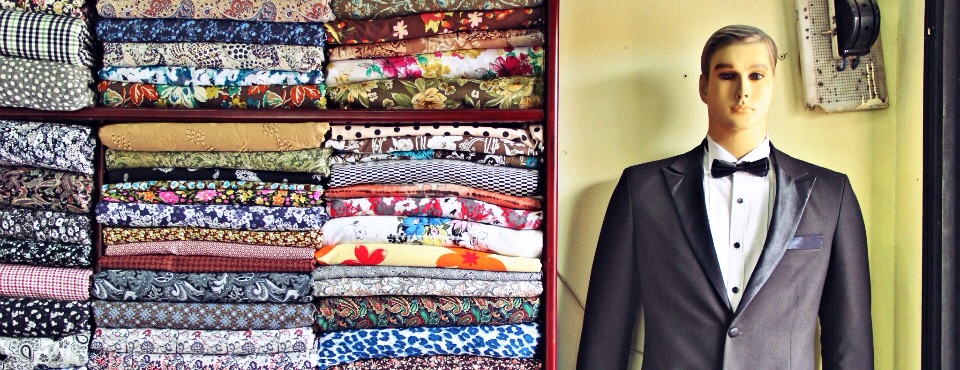
Where every second shop in historic Hoi An is a bespoke tailor: Suits are made to measure in 24 hours to three days, with prices starting at $100 per set, and anything made in less time for less money (and with less than two rows of stitching) is said to be a shoddy job.
Where expensively-dressed businessmen and students alike sit on the sidewalk in Parisian-style cafes. But the tables are one foot off the ground, and the seats are bright, plastic, and suspiciously similar to the chair you sat in in Kindergarten.
Where draught beer is brewed daily, and served frothy and cold on street corners for as little as 20 cents a glass. Where you can – and do – spend seven hours in a tiny plastic chair watching the motorbikes whirr by, declining vendor after vendor, and drinking your way through a barrel of Bia Hoi.
Where 'Made In Vietnam' stores offer past-season and surplus clothing from Zara, H&M, Forever XXI and Mango factories, in sizes more suitable to dolls than human beings.
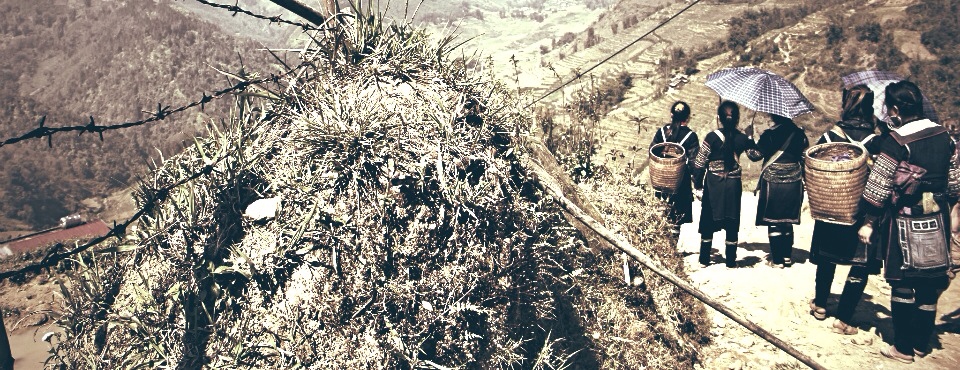
Where, even if you're dripping with rain and loaded with bags as you run for a bus you may not catch, the hilltribe women in Sapa will accost you with bead purses and bracelets, whining “You buy? Shopping? Maybe later?” (And if you politely choose “maybe later” they will remember you and track you down every consecutive half hour saying, “You promised!”)

Sven svenson
Apr 9, 2013 -
Hahaha you promised!! I like the sound of this place. Except they don’t seem to have much regard for their pets and livestock. Miss you guys!
linda
Apr 9, 2013 -
so interesting. your descriptions are vivid. wish i was there, the eviscerated animals might have bothered me.
Tania Bloomfield
Apr 14, 2013 -
You capture the essence of Vietnam perfectly, and bring back so many memories!! Thank you so much for reawakening my senses and making my return there this coming summer all the more palpable….